

Humidifier care
How to look after a humidifier: daily, weekly, before storage
Start with daily care and cleaning for the MH-204W / MH-204B. Then find checks for missing mist, white dust and differing humidity readings. For other models, follow the care instructions in their own manual.
Updated:
The short answer
Every day, empty what is left, rinse the tank and refill with fresh cool water no warmer than 40 °C. Clean the chamber, float and transducer weekly with a soft cloth and the special brush, and remove scale with descaler or a weak white-vinegar solution. Unplug the humidifier before any maintenance.
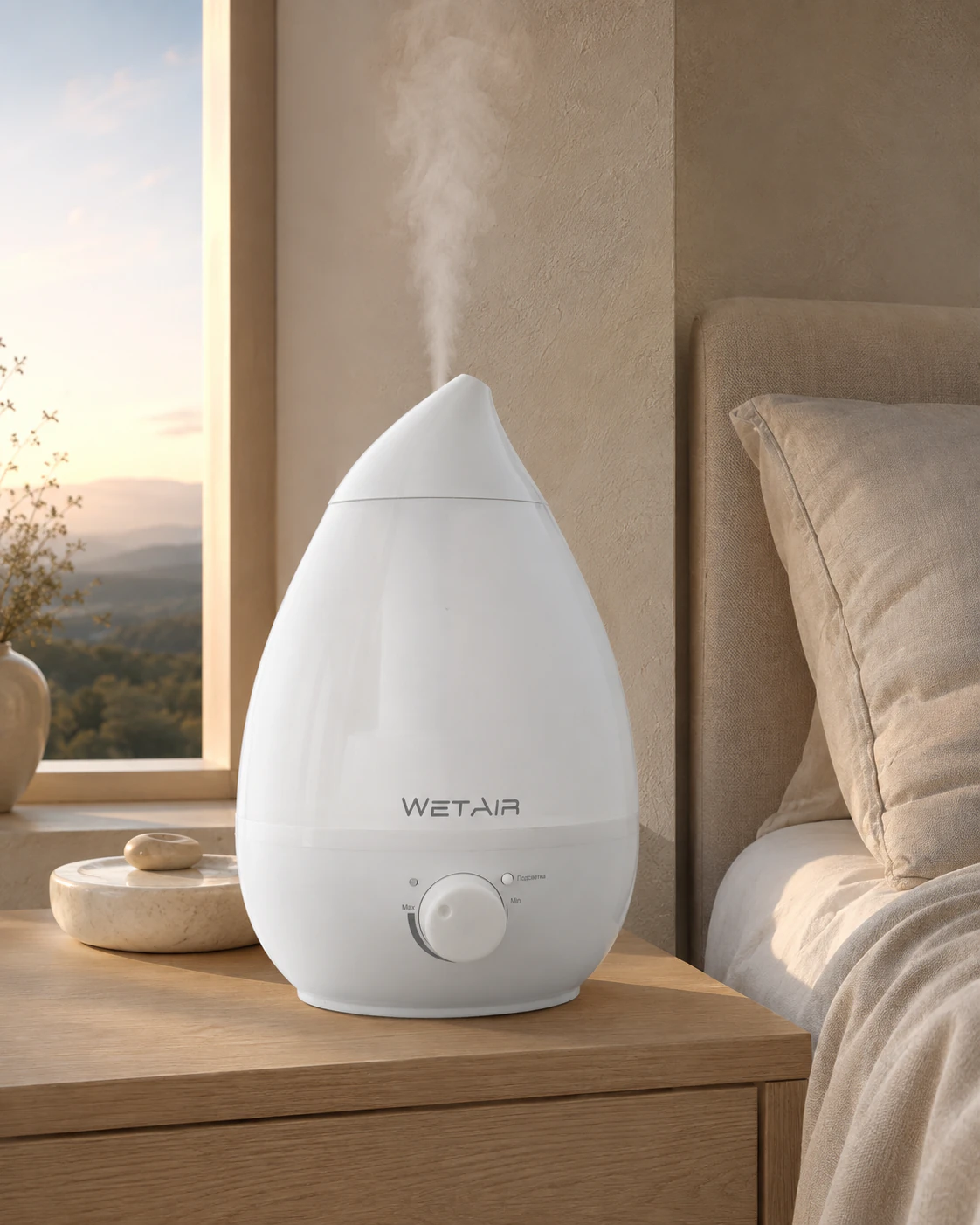
What to clean on the MH-204, and how
The tank, water chamber and transducer need different care. Follow the MH-204 manual’s recommendations for each part below.
- Nozzle
- For mist only. Never pour water through it or cover it.
- 2.3-litre tank
- Daily: empty, rinse, refill with fresh water up to 40 °C. For scale, vinegar solution for 20 minutes.
- Chamber and float
- Once or twice a week: a soft damp cloth and a brush for awkward corners.
- Transducer
- 3–5 drops of descaler or vinegar solution, 5 minutes, the special brush, then rinse.
- Where it stands
- A level, stable surface at least 60 cm above the floor and at least 10 cm from the wall; mist away from furniture and electronics.
Unplug before any maintenance.
If something goes wrong
Quick fixes from the MH-204 troubleshooting table.
Light on, but no mist
Check there is water in the tank. If it is overfilled, pour a little out.
The mist smells unpleasant
Leave the tank open for 12 hours in a cool, dark place, clean the unit and use clean water with no additives.
You hear water gurgling
The valve is feeding water into the chamber; the sound stops when it is full.
The tank cap will not unscrew
Put a little liquid soap on the cap seal.
White dust on furniture
Switch to purified or distilled water. If an optional cartridge is fitted, check its service life and replace it as needed.
If the problem persists, switch off, unplug and contact service. Do not open electrical parts yourself.
Routine care · MH-204W / MH-204B
Daily: fresh water
Unplug the humidifier, remove the tank, pour away what is left and rinse it. Fill with clean cool water no warmer than 40 °C through the tank opening — never through the nozzle. The manual allows drinking water that meets the standard, or distilled water. Do not top up yesterday’s water, and never add aromatic oils, conditioners or detergents.
Weekly: chamber, float and transducer
Wipe the humidifying chamber with a soft damp cloth and use the special brush for hard-to-reach areas. Check the float: there should be no scale or dirt on or around it. Wet scale on the transducer with 3–5 drops of descaler or a white-vinegar solution of 2 teaspoons per 2.5 litres of water. Wait 5 minutes, clean it off with the special brush only and rinse with clean water. Never use hard or sharp objects on the transducer.
Scale in the tank
Wipe the tank with a soft cloth dampened with descaler or the same vinegar solution, then rinse. If the scale will not shift, fill the tank with the solution for 20 minutes, close the cap, shake for a minute and rinse thoroughly with clean water. Wipe the outside with a soft damp cloth; the manual prohibits petrol, solvents and harsh cleaners. Never immerse the body in water.
Cartridge and white dust
MH-204 may have an optional water-treatment cartridge. If fitted, it is rated for about 400 litres; the manual advises replacing it every 3 months, or sooner with hard water. White dust comes from minerals in the water; if a cartridge is fitted, the dust may indicate that it is spent. If the dust continues after replacement, switch to purified or distilled water; with distilled water the cartridge can be left out. A yellowish tint to the water with a new cartridge is described as normal.
“Drinking water” and “filtered” do not mean demineralised. Check the treatment method against your humidifier manual; changing the water type does not replace cleaning.
| Water | What to check |
|---|---|
| Filter jug | Check the particular cartridge: reducing hardness does not guarantee removal of all minerals. |
| Bottled drinking water | Read the label: mineral or spring water can contain minerals. |
| Distilled | Names a treatment that reduces mineral content; use where permitted by the manual. |
MH-204W/B: from storage to fresh water
Store the humidifier without leftover water. Follow the MH-204 care instructions above for the tank, chamber, float and membrane; never immerse the housing.
Before a break
Switch off, unplug and empty the water. Clean accessible water-contact parts, rinse away cleaning solution and let them dry. Store in its packaging in a dry, heated room.
Before restarting
Inspect the cable, plug and tank; remove dust and scale using the permitted method and rinse water-contact parts. Check the cartridge if fitted. Fill with fresh permitted water, seat the tank correctly and supervise the first run.
If it smells or leaks
Stop and unplug. For stale water, clean the tank and chamber, rinse thoroughly and replace the water. If the smell persists, or there is a crack or leak, do not continue misting until service has checked it. The manual's advice to leave the tank open for 12 hours addresses a new-appliance smell; it does not replace cleaning after storage.
Readings and troubleshooting
A room hygrometer versus the appliance display
A casing sensor measures conditions near the appliance; a separate hygrometer measures its own location. Keep it out of direct mist and do not compare instant figures from different temperature zones. To observe the trend, place the separate sensor nearby in a permitted position, let readings settle and record temperature, then check the normal room area. This is not calibration. If readings change suddenly after cleaning or relocation, check position, dryness and permitted care rather than opening any sensor housing.
AUTO only where the model provides it
Distinguish mist-output control from maintaining a humidity target. A display or mechanical dial alone does not establish an AUTO function. Check whether your exact manual documents automatic maintenance, which settings are available and when output changes. Stopped mist does not automatically mean an empty tank: it may be a mode condition only where that behaviour is documented. Do not try to maintain a continuous cloud when the room already has condensation; check water level and selected mode separately.
Humidity readings: check the location
Place portable hygrometers together in a permitted position away from mist, sunlight, fan jets and radiator heat. Let readings settle according to their instructions; there is no universal waiting time. Do not remove a built-in sensor from its casing: compare from a permitted nearby position, then assess the normal room area.
Record simultaneous readings
Do not compare one sensor's morning value with another's evening value. Take several paired observations in stable conditions and after changing position.
| Log entry | What it helps establish |
|---|---|
| Time, position and temperature A and B | Whether conditions are comparable |
| RH A and RH B at the same time | Whether the difference persists |
| Mist, sunlight, heating and airing | Whether position explains the change |
Interpret the result
If the difference changes with position, correct positioning first. If it persists, check the instruments' stated accuracy, ranges and manufacturer requirements, or contact service. A household comparison does not establish a reference standard; do not apply a permanent offset from a single reading.
Where does the fragrance belong?
Find the named component and permitted substances in your own manual. Do not assume any small recess is an aroma compartment or borrow another model's dosage.
| Part or appliance | What to verify |
|---|---|
| Water tank | Which water and additives are explicitly allowed |
| Separate aroma compartment | Whether fitted, the correct insert and method |
| Aroma diffuser | Its own mixture, care and intended-use instructions |
If oil is already in the tank
Stop and unplug. Do not disperse the remaining contents to empty the tank. Use only permitted emptying and cleaning procedures. Do not add solvent or an increased dose of detergent. For an oily film, deformation, leakage or persistent smell, contact service before restarting.
Fragrance is not maintenance
Oil does not replace fresh water or cleaning. If stagnant water causes a smell, address the cause first. An aroma feature does not turn a humidifier into a treatment device or establish that any oil is suitable for every person or animal in the room.
There is water in the tank but no mist
A full tank does not necessarily mean water is reaching the working chamber. Work through these checks in order:
Check the indicator against the manual
For the MH-204W / MH-204B, look up the indicator in their own manual. The same colour can mean different things on different models.
Unplug the appliance and check the tank
Make sure the tank is fitted correctly. Inspect only water-path parts identified for user access. Clean the accessible float as described in the care section; do not press it with a tool or open the housing.
Still no mist? Contact support
If the symptom remains after correct reassembly, give support the model, a photo of the indicator and a list of the checks you have made.
MH-204W / MH-204B care checklist
- Unplug before every refill and every clean.
- Daily: empty, rinse the tank, refill with fresh water up to 40 °C.
- Weekly: chamber, float and transducer — cloth and special brush.
- If scale builds up in the tank, use the method and proportions in the tank descaling section, then rinse thoroughly.
- If a cartridge is fitted, replace it every 3 months; hard water may use up its capacity sooner.
Common mistakes
- Topping up old water with fresh water.
- Pouring water through the nozzle or into other openings.
- Cleaning the transducer with a knife, metal scourer or other sharp objects.
- Adding essential oils or detergents to the tank.
- Assuming the more expensive sensor is automatically a reference.
- Changing service calibration after one discrepancy.
- Putting oil on the transducer or into the nozzle.
- Disguising stale-water odour with fragrance.
- Filling above the maximum mark to clear a warning.
- Pressing a sensor or defeating low-water protection.
Did you find your answer?
If this solved your question, you can bookmark this guide.
Try your question or model in the helper. If the guidance did not help, contact support.
WetAir manuals and support
Check the exact model requirements
If there is no mist after cleaning or you hear an unusual noise, check the troubleshooting table in the manual. Electrical and mechanical parts are repaired by WetAir service only.
Models to compare



Sources and checks
Intervals, water temperature, vinegar solution, cartridge and placement come from the WetAir MH-204W/MH-204B manual (“Care” and “Troubleshooting”). It gives two intervals: the general advice says tank and transducer every two weeks, while the cleaning section says chamber, float and transducer once or twice a week; weekly cleaning satisfies both. EPA advice on fresh water is context only. Sensor differences and AUTO advice are general checks; automatic capabilities require confirmation in the exact model’s manual.
Frequently asked questions
Can I just top up the water?
No. Empty and rinse the tank every day so the water never stands.
What should I clean the transducer with?
Descaler (3–5 drops) or a white-vinegar solution of 2 teaspoons per 2.5 litres of water. After 5 minutes, remove the scale with the special brush and rinse. Sharp or hard objects are not allowed.
Weekly or every two weeks?
The manual gives both: its general advice says every two weeks for the tank and transducer, while the cleaning section says once or twice a week for the chamber, float and transducer. Weekly cleaning satisfies both.
Why is there white dust around the humidifier?
These are minerals from hard water. If the optional cartridge is fitted, check its service life (about 400 litres or 3 months) and replace it as needed. Alternatively, switch to purified or distilled water.
Does AUTO remove the need to check humidity?
No. Where provided, it uses its own sensor and algorithm. A separate hygrometer outside the mist and surface checks help assess the room, but do not justify changing factory calibration.
What difference is acceptable?
Compare the accuracy and ranges of your actual sensors; there is no universal figure.
Does this apply to a dehumidifier?
Yes, the comparison principle is the same; positioning and sensor access remain model-specific.
The box says aroma. Can oil go in the tank?
That is not enough: check the permitted location and method in the manual.
Is there a universal number of drops?
No. Follow the instructions for your exact appliance and permitted product.
Does a full tank rule out a water-supply problem?
No. Stored water and delivery to the working chamber are different things. A single indicator cannot establish the cause remotely.