

Dehumidifier selection
How to match a dehumidifier to the load and routine
Room volume sets the scale, but temperature, moisture source, air exchange and the way the appliance will be used change the capacity needed. A practical choice must also account for water removal, maintenance, placement and noise.
Updated:
The short answer
Compare room volume, temperature, measured humidity and the source of moisture before looking at capacity. Rated litres per day are measured under stated test conditions, not guaranteed in your home. Then check placement, drainage or tank access, filter care and noise during the hours you plan to run the unit. A model that fits this routine is more useful than one chosen for the largest headline number.
Start with room volume and the working boundary
Measure length, width and ceiling height, and note doors, stairs and passages that normally stay open. The appliance may serve more than the floor area of one room, while closed doors separate the spaces. Choose a position with clear inlet and outlet airflow, a suitable socket and access to the tank. Place the humidity sensor away from the stream of dry air so it describes the room rather than the appliance outlet.
Describe the source and duration of the load
Separate temporary moisture from showers, cooking or cleaning from a persistent leak, wet construction materials or inflow from another room. Record readings before and after the activity and whether they recover without the appliance. Regular moisture needs a practical daily operating and drainage plan. A leak needs repair, not simply a more powerful dehumidifier; coordinate drying of building materials with the person responsible for the repair.
Account for temperature, air exchange and drying laundry
Temperature affects the operation of a condensing dehumidifier and how much moisture the air can hold, so record it during the hours when the appliance would actually run. Note open doors, outdoor air supply, extract fans and the normal mechanical ventilation separately. Because of air exchange, the appliance handles more than the initial room volume: moisture may continue to arrive from a hallway, bathroom, basement or outdoors. Do not block intended ventilation merely to lower a reading faster; it performs a different function. Drying laundry creates a repeated moisture load, so note washing frequency, the position of the airer, whether doors are open and any mechanical removal of moisture provided by the equipment. Compare scenarios separately: an ordinary day and a day with wet laundry do not produce interchangeable results. If the routine varies over a week, select for the most representative demanding task without promising identical water collection every time.
Read laboratory litres per day in context
Read litres per day together with the manufacturer's test temperature and humidity. In cooler or drier air, a condensing dehumidifier will usually collect less water; a shower, laundry or open door can change the load again. Rated extraction is not a guaranteed household result and does not convert into one exact room-area formula. Compare extraction, operating-temperature range and power separately, using the specifications of the exact model.
Compare documented model examples
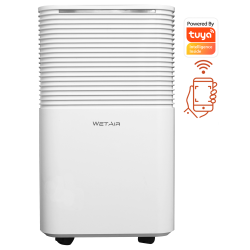
Documented examples: WAD-A10L — 10 l/day, 195 W, 5–35 °C; WAD-F12L — 12 l/day, 185 W, 5–35 °C; WAD-B25L — 25 l/day, 380 W, 5–38 °C. Each set gives that model's rated extraction, power and operating-temperature range, not guaranteed water collection in your room. Check noise, tank capacity and drainage separately in the exact manual. These examples do not confirm stock availability; check the catalogue for current status.
Plan for the tank or continuous drainage
The way water is removed determines whether the intended routine is practical. For a tank, check its documented capacity, ease of removal, access without moving the appliance and the model's behaviour once it fills. Decide how often you can realistically inspect and empty it; the rated litres per day do not provide an exact schedule because collection changes. For continuous drainage, first confirm that the exact model manual permits the arrangement. The hose route must carry water to a suitable receiver without kinks, crushing, an unsafe rise or a trip risk. Its outlet must not allow backflow, and a possible leak must not reach a socket, cable or finish. Drainage reduces manual emptying but does not remove the need to inspect the appliance and route. Where no safe permanent route exists, use a managed tank routine rather than an improvised temporary hose.
Check the filter, airflow and noise
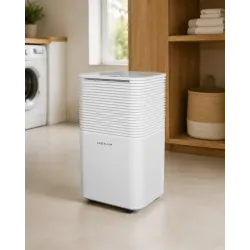
A dehumidifier needs an unrestricted path through its air inlet and outlet, so check permitted placement in the manual before choosing a position. Furniture, textiles, dust or a tight recess can restrict flow and make a comparison of rated values meaningless. Check how the filter is removed, what cleaning method is permitted, how it dries and what interval is specified for that particular model. Do not copy a maintenance schedule from another appliance or run the dehumidifier with a damp filter fitted incorrectly. Assess noise as more than a number on a product page: consider its character, changes between modes, vibration through the surface, distance from a bed or desk and the planned operating hours. A quieter mode may operate differently, so consider it with the moisture load rather than as a separate promise. The final choice must be practical to place safely, maintain, hear during an acceptable routine and inspect regularly.
What to record before choosing a dehumidifier
| Factor | What to record | How it informs the decision |
|---|---|---|
| Room volume and zone boundary | Length, width, ceiling height, open passages and doors. | Describes the air volume and boundary the appliance must serve without turning floor area into a formula. |
| Temperature and repeated humidity | Temperature and humidity readings during normal hours, before and after a repeated event. | Provides comparable context; rated litres per day do not predict household water collection. |
| Moisture source and duration | A leak, water ingress, drying laundry or a short household load, including when it starts and how long it lasts. | A continuing water input first requires its cause to be addressed; a temporary load needs a separate operating scenario. |
| Air exchange and doors | Open doors, outdoor air supply, extract fans and adjoining zones. | Shows where fresh moist air enters; dehumidification does not replace ventilation. |
| Tank or drain routine | How often the tank can realistically be checked and emptied, or which safe drain route the manual permits. | Determines whether the routine is manageable; drainage does not remove the need to inspect the appliance and route. |
| Placement, filter and noise | Clear air inlet and outlet, filter access, the supporting surface, distance from a desk or bed and planned operating hours. | Rules out an option that cannot be placed safely, maintained or used acceptably in the intended routine. |
Checklist before choosing
- Record room volume, operating temperature and the repeated humidity pattern.
- List moisture sources, drying laundry and the air-exchange conditions.
- Compare litres per day only with the test conditions and operating-temperature range.
- Choose a realistic tank-emptying routine or a checked drainage route.
- Check filter access, airflow requirements and whether the noise is acceptable.
Common selection mistakes
- Turning floor area into a precise capacity formula.
- Treating laboratory litres per day as a constant result at home.
- Ignoring a cool room, open doors or a continuing supply of moist air.
- Choosing without a plan for tank emptying, drainage, filter cleaning and noise.
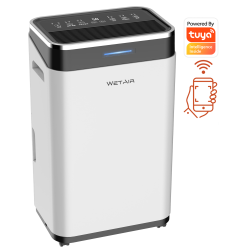
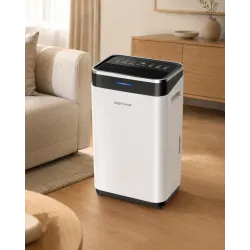
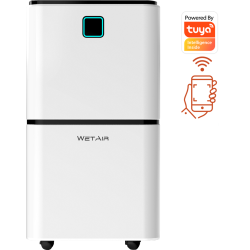
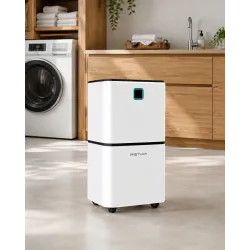
WetAir manuals and support
Check the exact model requirements
Before use, check the selected model's manual for installation, start-up, tank emptying, drainage, filter cleaning and post-transport instructions. Contact WetAir service if the room conditions fall outside the manual limits.
Sources for specifications
The numeric examples are checked against the WetAir WAD-A10L, WAD-F12L and WAD-B25L manuals and apply only to the corresponding model. The US Environmental Protection Agency and UK Government sources support boundaries about moisture sources, building causes and ventilation context only; they do not support appliance extraction. General discussion does not replace the manual requirements.
Frequently asked questions
Why can't I choose a dehumidifier from floor area alone?
Rooms with the same area can have different ceiling heights, temperatures, moisture loads and air exchange. Floor area alone therefore determines neither actual water collection nor the operating routine. Add the boundary of the open zone, source type and duration, doors between rooms and the hours when the appliance can genuinely operate to the room measurements.
Why might a dehumidifier collect less than its rated figure?
Rated extraction is established under specified conditions. Cooler or less humid air yields less condensed water, and the load changes after humidity falls. Compare days with similar temperatures and household routines; fresh moisture, open doors or drying laundry can alter the result in the opposite direction.
When is continuous drainage more convenient?
When the appliance operates for longer and there is a safe continuous-drain route permitted by its manual. If there is no such route, plan regular tank emptying. Check the receiver, fall and protection against hose kinks, as well as the consequences of a possible leak; drainage does not remove the need to inspect the installation.
Do filter access and noise matter when choosing?
Yes. The filter must be accessible for the prescribed care, and the level and character of the noise must suit the place and operating hours. Both affect whether the routine is practical. Also check free airflow, how the filter is refitted after cleaning and whether a hard surface transmits vibration into an adjoining room.