

Humidity diagnosis
How to find the cause of excess indoor humidity
Match measurements to where and when moisture appears, correct the source, then decide how the remaining airborne moisture should be controlled.
Updated:
The short answer
First find the moisture source: a leak, a cold surface, poor ventilation or a temporary load from showers, cooking or laundry. Note where dampness appears and what happens beforehand. A dehumidifier can remove water from the air, but it cannot repair a leak, a thermal bridge or damaged materials. Address the cause and check the same areas again after the work.
Build a pattern, not a single reading
Keep a short log of humidity, temperature, weather and activities such as showers, cooking and drying laundry. Place the sensor away from windows, heaters, draughts and water mist. Note which surfaces get wet and how long they take to dry. Compare similar days: a single reading cannot distinguish a leaking pipe from condensation, but a recurring link to rain or a household activity helps decide what to inspect next.
Check cold surfaces and thermal bridges
Condensation forms when moist air meets a sufficiently cold surface. A thermal bridge can make one strip or corner colder than the surrounding wall, so the two problems are connected, not alternatives. Check whether curtains or furniture block warmth and airflow near the wet area. Repeated dampness on the same cold spot needs assessment of insulation and construction; do not hide it behind paint or furniture. Drying the air alone does not explain or repair the cold surface.
Check for a leak or water ingress
A patch that grows after rain, melting snow or plumbing use may indicate water ingress. Inspect only safely accessible joints and surfaces; photograph the patch and record when its edge changes. Do not open walls or inspect wiring yourself. Contact the building owner or a qualified repairer. Dehumidification may support drying during repairs, but even a dry-looking patch does not prove the leak is fixed or concealed materials are sound.
Assess the intended air exchange
If moisture builds across the room and lingers after showers or cooking, check the intended ventilation. Are extract fans working, grilles clear and supply openings unobstructed? An audible fan is not proof of adequate airflow: replacement air needs a route in. Clean only accessible parts as instructed and do not alter shared ducts. An open window may help temporarily, depending on outdoor conditions. A dehumidifier removes water; ventilation also replaces indoor air, so one does not substitute for the other.
Recognise a temporary moisture load
Showers, cooking, wet cleaning and laundry add moisture for a limited period. Note how high readings rise and whether they return to their usual range afterwards. Use the intended extract ventilation and lids on cooking pans, and account for laundry load and drying frequency. These activities can expose an existing ventilation or insulation problem; they do not mean the occupant caused a building defect. If dampness persists after the activity stops, investigate the other causes too.
Define the dehumidifier's role after diagnosis
Once the source is known and has stopped or is being repaired, a dehumidifier can help control excess moisture in the air. Define the room it will serve, its position and the tank-emptying or drainage routine; use the sizing guide to compare models. Track humidity and damp surfaces under similar conditions, not just water collected on one day. Continued water ingress, a blocked ventilation duct or a thermal bridge still needs its own repair.
Treat mould and damaged materials separately
Stop the moisture source and assess visible mould, softened material or delamination before covering or redecorating the area. Cleaning, repair or replacement depends on the material and extent of damage; recurring, extensive or concealed damage needs a qualified assessment. Do not inspect electrical parts or hidden services yourself. A dehumidifier does not remove mould or repair damaged materials. After the work, revisit the affected area during normal use and record any recurrence.
Diagnostic sequence
- Log readings, weather and household events during normal use.
- Map condensation, damp patches or moisture and check nearby water sources.
- Check extract, air supply, ventilation paths and cold surfaces.
- Separate a temporary moisture load from a persistent or localised defect.
- Plan repair or restored air exchange first, then assess whether dehumidification is needed.
What obscures the cause
- Drawing a conclusion from one reading without noting location or events.
- Calling every damp patch condensation without checking for water ingress.
- Treating a dehumidifier as a substitute for repair, ventilation or work on damaged material.
- Blocking ventilation paths to retain heat without checking the intended air exchange.
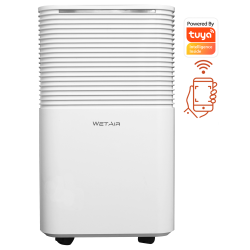
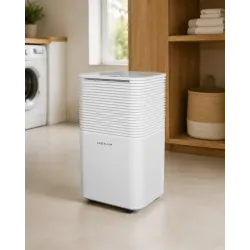
WetAir manuals and support
Check the exact model requirements
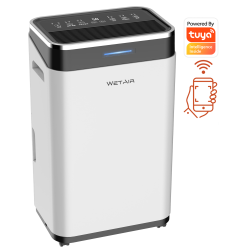
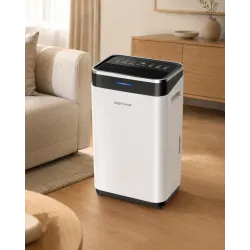
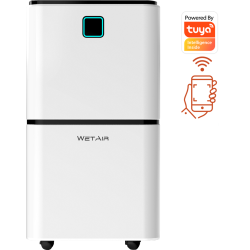
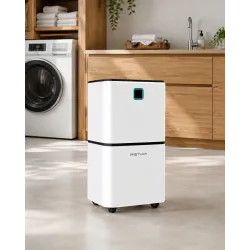
If airborne moisture still needs controlling after the source is addressed, continue to the dehumidifier selection guide and check placement, drainage and care in the chosen model's manual.
Sources and limits of this guidance
The distinction between controlling airborne moisture and repairing its source follows guidance from the US Environmental Protection Agency; the approach to condensation, leaks and building causes follows UK Government guidance. The UK publication is primarily for housing providers in England, so only its diagnostic boundaries are used here, not local legal rules. The ventilation document is likewise used only in its stated building context. The WetAir manuals linked below cover operation of specific appliances only.
Frequently asked questions
Does condensation on a window mean there is a leak?
Not necessarily. Compare the droplets with surface temperature, air exchange and household vapour sources, but investigate a local patch after rain or beside a pipe as possible water ingress. Record when and where it appears, compare several similar scenarios, and do not extend a conclusion about glazing to a wall or ceiling without a separate inspection.
When can a dehumidifier be part of the response?
When excess airborne moisture needs controlling and its source has been identified or is being corrected. For a continuing load, air exchange and the room routine must also be considered. Define the working zone, sensor position and water-removal method in advance, then judge the outcome from a repeated pattern rather than one full tank.
Does a dehumidifier replace ventilation?
No. Dehumidification removes some moisture from the air, while the intended air exchange serves a separate building-system function and needs its own check. Do not block grilles or supply air to change a reading faster; if the normal system is not working, investigate that fault separately.
What should I do with an area where mould is already present?
Stop the moisture input first and assess the material's condition. A dehumidifier does not repair the substrate or remove affected material; the appropriate cleaning or replacement method must be decided separately. Record the extent before work, do not hide the surface with finishes, and use a competent professional where the case recurs, involves concealed layers or concerns the building structure.