

Choosing a water heater
How to choose a storage water heater for a flat
Tank volume decides how many people can shower in a row; power decides how quickly the water reheats.
Updated:
The short answer
Start with volume: 50 litres is usually considered for one or two people and 80 litres for three or four, but shower flow, shower length and how many people shower back to back decide it. Both series have a 1500 W element and a 75 °C maximum. MWH1 has a wet element with an anode and digital control in 1 °C steps; MWH4 has a dry element and five settings from 35 to 75 °C. Check the space: 715 mm tall for 50 litres and 1030 mm for 80 litres, and the wall must hold twice the weight of the full tank.
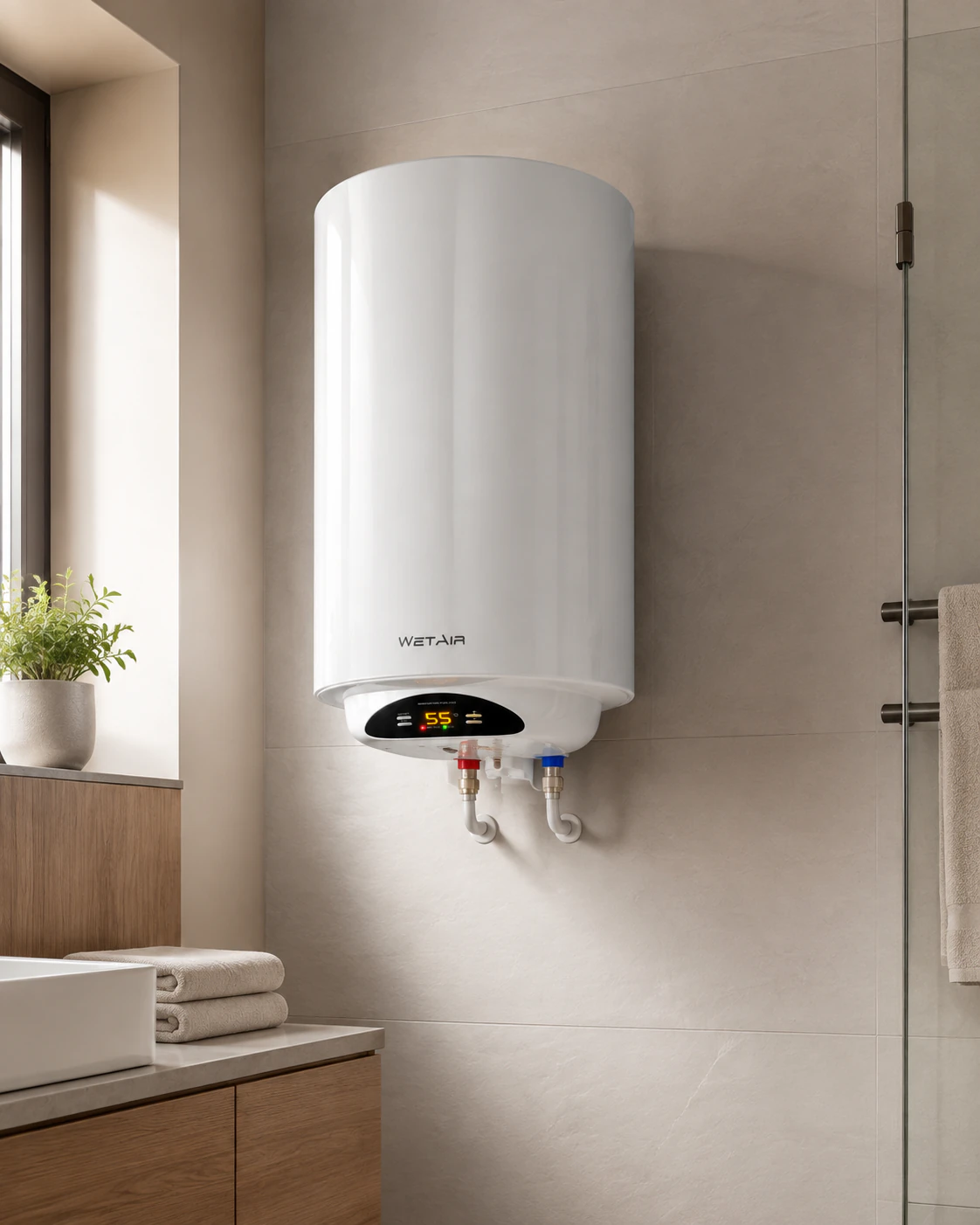
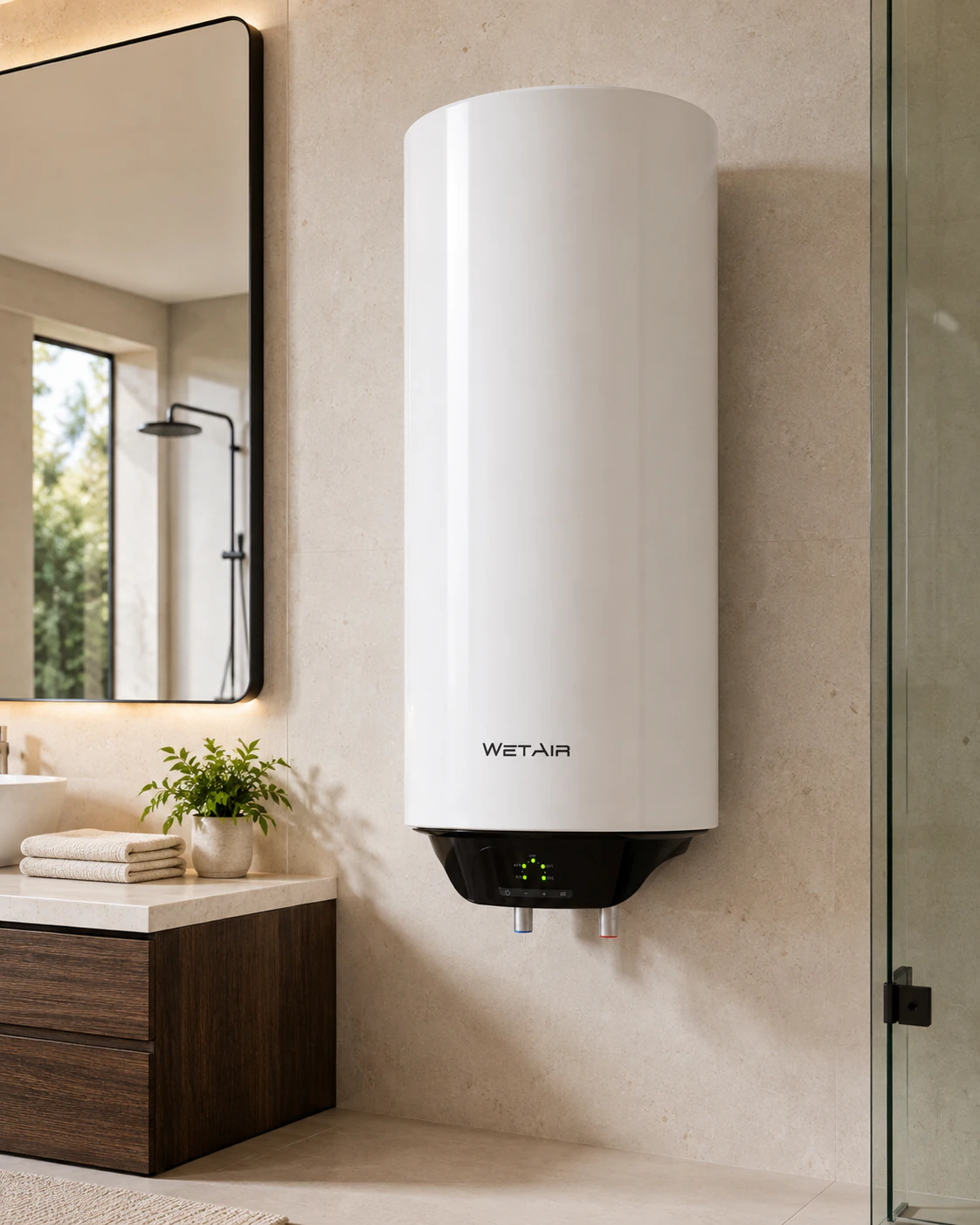
How a storage water heater is laid out
Before choosing and installing, check the water connections, heating element type, temperature controls and maintenance requirements.
- Cold water in
- Bottom right. The supplied safety valve fits here; a few drops from it during heating are normal.
- Hot water out
- Bottom left, to the mixer. Check the temperature: water in the tank can reach 75 °C.
- 1500 W element
- MWH1: a wet enamelled element in the water; MWH4: a dry element in a protective sleeve (product cards).
- Anode
- Protects the tank from corrosion. On MWH1, check it at least every 6 months.
- Control panel
- MWH1: 1 °C steps, ECO 55 °C. MWH4: 35/45/55/65/75 °C, ECO 55 °C.
The magnesium anode recommendation comes from the MWH1 manual. For MWH4, follow the maintenance schedule in its own manual.
MWH1 or MWH4
They differ in controls and element type; power and maximum temperature are the same.
| MWH1 | MWH4 | |
|---|---|---|
| Controls | digital panel, 1 °C steps, saved after 5 s | five settings: 35, 45, 55, 65, 75 °C |
| ECO | 55 °C (press for 1 s) | 55 °C (press for 1 s) |
| Element | wet enamelled, magnesium anode (product card) | dry, in a protective sleeve (product card) |
| 50 l: width × height × depth | 385 × 715 × 385 mm | 385 × 715 × 340 mm |
| 80 l: width × height × depth | 385 × 1030 × 385 mm | 385 × 1030 × 385 mm |
| Power, maximum, pressure | 1500 W, 75 °C, 0.75 MPa | 1500 W, 75 °C, 0.75 MPa |
Dimensions come from the manuals’ tables. For both series the wall must carry twice the weight of the full tank.
How many litres you need
Estimate peak demand: how many people shower back to back, for how long and at what flow, and whether hot water runs in the kitchen at the same time. A larger tank stores more hot water but takes longer to heat from cold with the same 1500 W element. “80 L” does not guarantee enough for a bath: hot water is mixed with cold, and the result depends on the tank temperature and the mixer setting.
Controls: MWH1 versus MWH4
MWH1: a digital display, with “+” and “−” changing the temperature in 1 °C steps; the value is saved after 5 seconds without a press, up to 75 °C; the heating light is red while the element works and green once the temperature is reached. MWH4: five settings — 35, 45, 55, 65 and 75 °C, in 10 °C steps. On both, pressing ECO for 1 second sets 55 °C. The display shows the temperature in the middle of the tank; water at the outlet can be hotter, so check it before use.
Wet or dry element
According to the product cards, MWH1 has a wet enamelled element in contact with the water and a magnesium anode, while MWH4 has a dry element in a protective sleeve. The MWH1 manual advises checking the anode at least every 6 months and having it replaced by service, and descaling the tank and element periodically. A dry element does not remove the need for maintenance: follow your model’s schedule.
Wall, dimensions and socket
Width is 385 mm; height is 715 mm for 50-litre models and 1030 mm for 80-litre ones; depth is 385 mm, or 340 mm for MWH4-50L. The wall must carry at least twice the weight of the filled heater; leave at least 0.2 m on the right for servicing. The earthed socket goes to the right above the heater, at least 1.8 m from the floor; portable socket strips are prohibited. Bathrooms have protected-zone restrictions, so installation is a job for a qualified professional.
First start and maintenance
Fill the tank first: open the cold supply and the hot tap on the mixer until water flows from it, check the joints for leaks, and only then switch on the power. The supplied safety valve fits on the cold inlet; a few drops from its outlet during heating are normal, and the drain tube must point downwards. If the heater will be unused for a long time or the room may freeze, drain the tank as the manual describes.
Pre-purchase checklist
- Count how many people shower back to back, and for how long.
- Measure the space: 715 or 1030 mm high, plus pipework.
- Check the wall can carry twice the weight of the full tank.
- Plan an earthed socket to the right above the heater, at least 1.8 m high.
- Choose the controls: 1 °C steps (MWH1) or five fixed settings (MWH4).
Common mistakes
- Buying 50 litres for a family of four who shower back to back in the morning.
- Switching on the power before the tank is full of water.
- Connecting the heater through an extension lead or socket strip.
- Never checking the anode on MWH1.
Models to compare
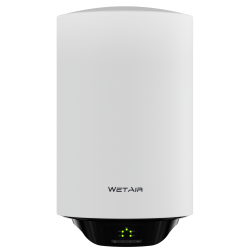
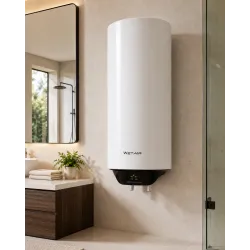
WetAir manuals and support
Check the exact model requirements
For installation, anode replacement or diagnostics contact a qualified fitter or WetAir service; do not dismantle the unit yourself.
Sources and verification
Dimensions, wall and socket requirements, controls, precautions and maintenance come from the WetAir MWH1 and MWH4 manuals (pages on installation, connection, control panel, precautions and specifications). Element type and anode material are stated on the product cards. People per 50 and 80 litres is a guide, not a guarantee.
Frequently asked questions
50 or 80 litres?
Start with 50 litres for one or two people and 80 litres for three or four, then estimate your real peak demand. The 80-litre model is 315 mm taller and takes longer to heat from cold.
What does ECO do?
Pressing ECO for 1 second sets 55 °C. Whether that suits you depends on your use and scald protection; it is not a universal recommendation.
What is the anode for, and how often should it be checked?
The anode protects the tank from corrosion and is gradually used up. The MWH1 manual advises checking it at least every 6 months and having it replaced by service.
Water drips from the valve — is it faulty?
A few drops during heating are normal: the valve is releasing excess pressure. If a lot of water comes out, contact service. Never block the valve outlet.