WAD-F12L
View review on Alloчудова річ. вирішила проблеми весною і осінню, стіни просохли. в шоці скільки вологи збирає з кімнат.
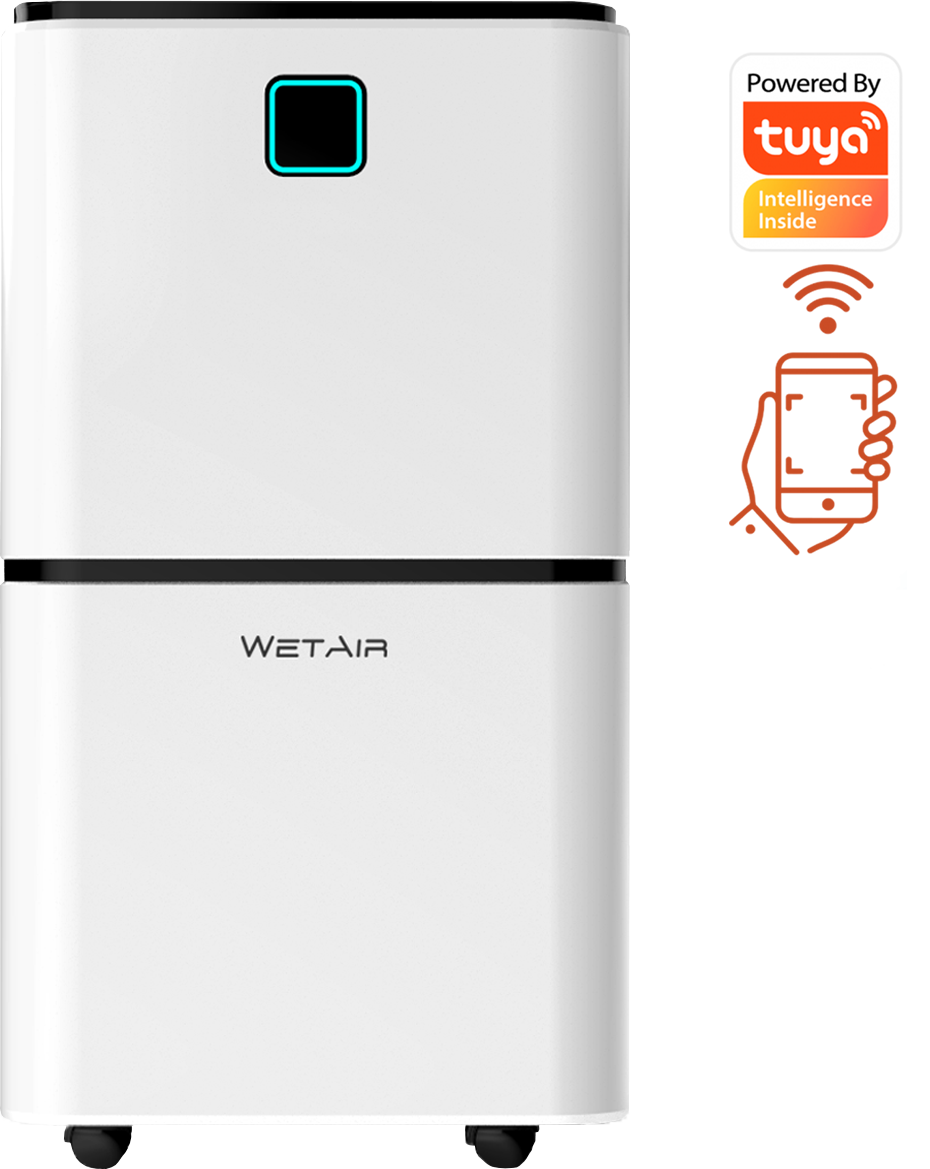
Product photo
WetAir · WAD-F12L
WetAir WAD-F12L is rated to remove up to 12 L/day and has a 2 L tank and a 1–12 hour timer. Automatic mode allows a humidity target; DRY and SLEEP operate without an adjustable target.
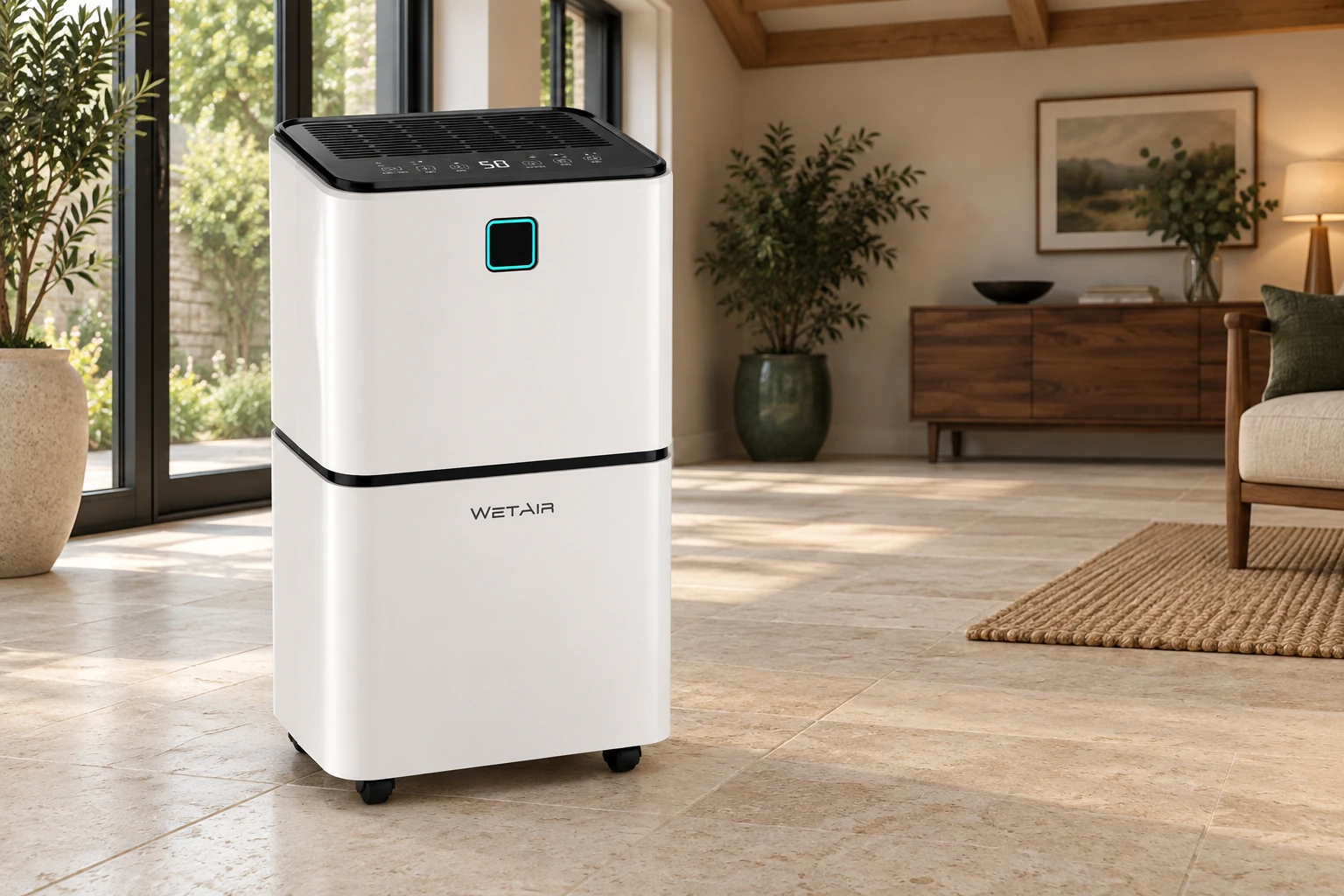
How it works
The dehumidifier cools air inside the appliance so some water vapour condenses.
A fan draws room air through the unit; clear grilles allow it to circulate freely.
On the cold heat exchanger, some water vapour turns into droplets. The amount depends on incoming air temperature and humidity.
Condensate from the WAD-F12L collects in its 2 L tank or flows out through a connected continuous drain.
Air passes the warm part of the system and returns to the room drier and slightly warmer.
The resultThe unit reduces excess humidity, but does not repair leaks or replace ventilation.
Set the desired humidity in automatic mode. DRY supports moisture removal while laundry dries, and SLEEP is for night-time use; neither offers an adjustable target.
The 2 L tank can be emptied manually. For uninterrupted DRY operation, connect continuous drainage and leave the tank in place. Keep laundry separate so water cannot drip onto the unit and the grilles stay clear.
WAD-F12L supports Tuya Smart for Wi-Fi control. Follow the connection procedure in the manual; DRY and SLEEP still have no adjustable humidity target.
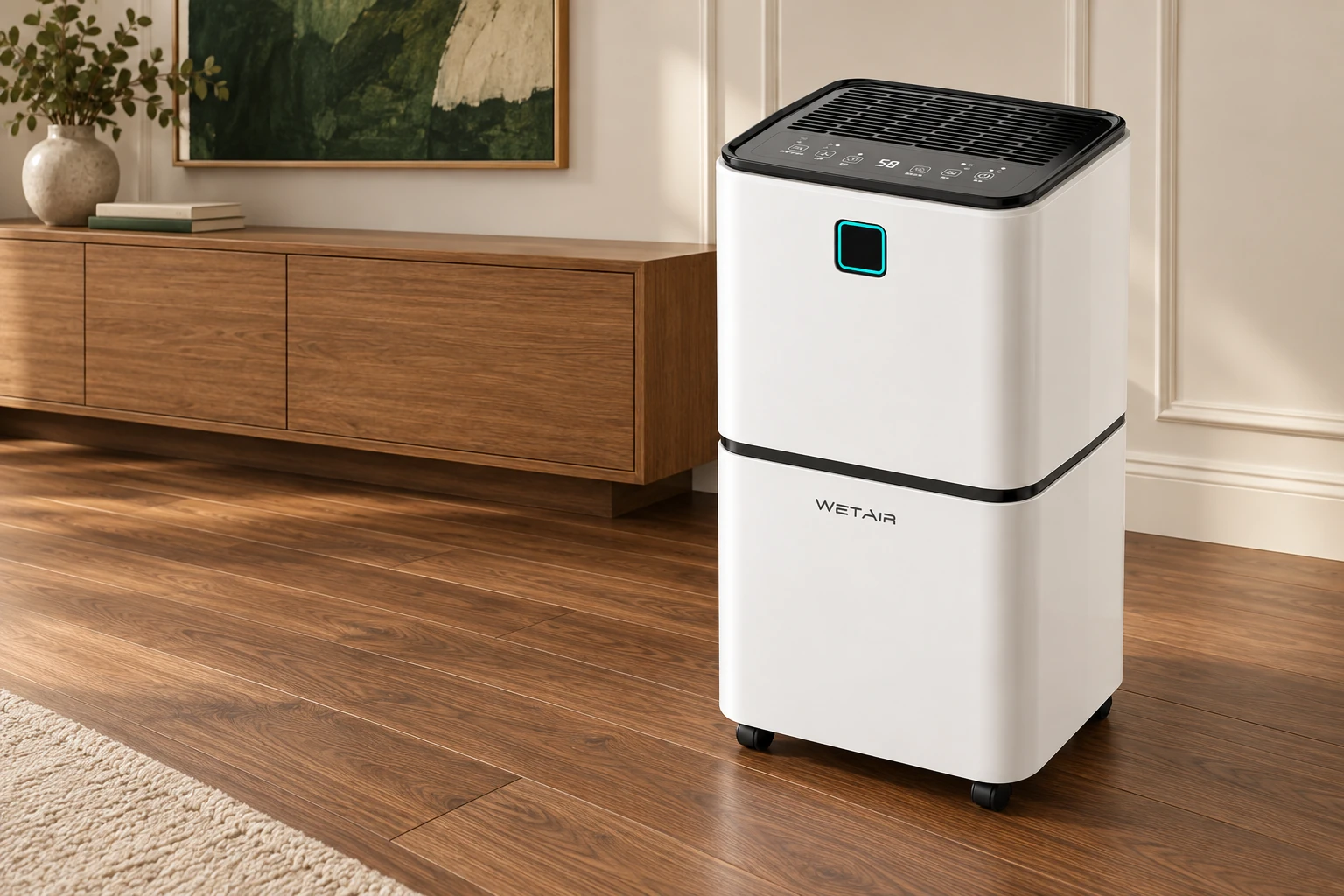
Position level with the clearances specified in the manual. Fit the tank in place; if drainage is needed, connect the hose as instructed without kinks.
Choose automatic mode to set a humidity target. DRY and SLEEP do not allow target humidity adjustment.
Check humidity and the full-tank indicator. Moisture from leaks or wet building materials also requires action at its source.
On the WAD-F12L, SLEEP and DRY do not support this adjustment. Select automatic mode to choose a humidity target.
The rating is measured under specified test conditions. Cooler or drier room air contains less moisture; judge the reduction in humidity, not just litres in the tank.
Model documentation and WetAir support.
Short positive excerpts about this exact model with direct links to public sources.
WAD-F12L
View review on Alloчудова річ. вирішила проблеми весною і осінню, стіни просохли. в шоці скільки вологи збирає з кімнат.
 WAD-F12L
View review on RozetkaЗадоволена. Гарно працює робоча конячка ще та.. дуже легкий в управлінні. Не шумний.
These links open general WetAir retailer pages and do not confirm stock for this model.



Practical guidance to help you use your appliance confidently and comfortably.