

Summer comfort
How to cool a room in summer
First keep heat out of the room, then choose between feeling cooler from moving air and real cooling that sends heat outside.
Updated:
The short answer
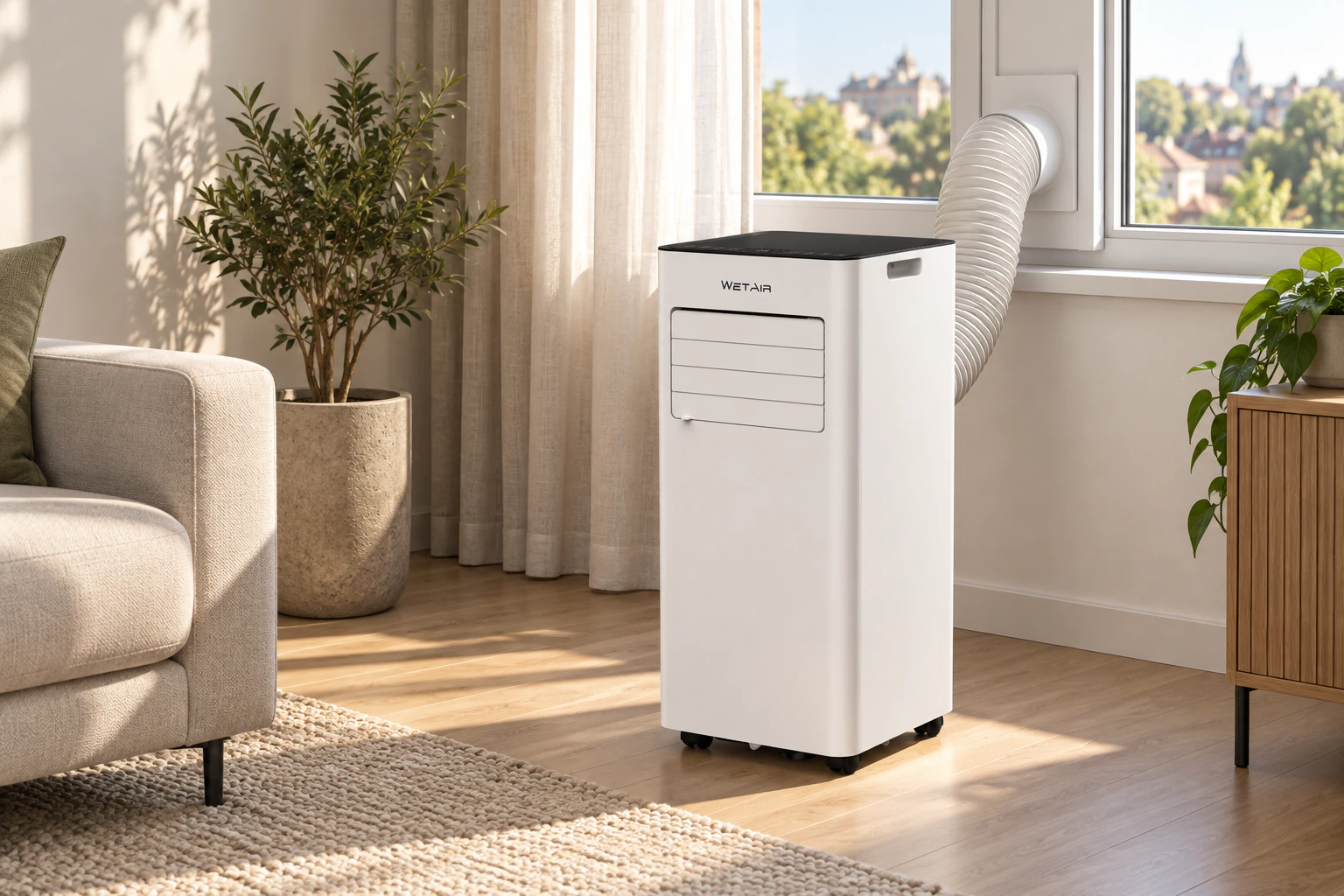
During the day, close curtains or blinds on sunny windows and switch off unnecessary heat sources. A fan only moves air: people feel cooler, but the room temperature does not drop. A portable air conditioner sends heat outside through its supplied hose and window adapter. According to the manuals, WPAC-E07K suits a room up to 25 m² and WPAC-H12KB up to 35 m².
Where heat comes from, and what removes it
Start with the heat sources: sunlight through windows, running appliances and hot air. Each calls for a different way to reduce heat entering or building up in the room.
- Sun through the window
- Close curtains or blinds during the day so the heat never gets in.
- Heat from inside
- Lamps, electronics and the hob warm the room. Switch off what you are not using.
- Portable air conditioner
- Sends heat outside through the supplied hose and a sealed window adapter.
- Fan
- Moves air around people: you feel cooler, but the temperature does not drop.
A fan helps you feel cooler but does not lower the air temperature. An air conditioner must exhaust heat outdoors to cool the room.
Fan or portable air conditioner
What each appliance does with the heat in the room.
| Fan | Portable air conditioner | |
|---|---|---|
| What it does | moves air — people feel cooler | removes heat from the room and sends it outside |
| Room temperature | does not drop | drops, provided the heat goes outside |
| Installation | stable surface, clear grilles | near a window: hose, window adapter, 50 cm around |
| Power use | SF-5045W — 40 W | WPAC-E07K — 780 W, WPAC-H12KB — 1300 W |
| Best for | moderate heat, airflow where people are | a hot room that needs a lower temperature |
Power figures come from WetAir manuals. The comparison does not promise a particular room temperature.
Keep the heat out
The cheapest degree is the one that never gets in. Close curtains or blinds on sunny windows before the sun reaches them, and air the room in the morning or evening when it is cooler outside. Switch off lights and appliances you are not using. Use the hob and oven less in a heatwave, and with the extractor on.
A fan: feeling cooler
Moving air speeds up evaporation from the skin, so people feel more comfortable. But a fan does not remove heat from the room: in an empty room it just stirs the air. Aim it where you sit or sleep and switch it off when you leave. More in the air movement guide.
A portable air conditioner: heat goes outside
The air conditioner takes heat from the room air and pushes it outside through a flexible hose. That makes the hot-air route the key part of installation: the supplied hose, a secured window adapter and sealed gaps around it. If the hose lies in the room or the window is wide open, the heat comes back. The models have a self-evaporating condensate system, and when the tank is full the unit switches off — then drain it as the manual describes.
Which model for which room
According to the manuals, the recommended room size is 25 m² for WPAC-E07K (780 W) and 35 m² for WPAC-H12KB (1300 W). A sunny aspect, large windows and several people in the room increase the cooling need. Separately, the manuals give a minimum room size for R290 refrigerant safety: over 7 m² for E07K and over 10 m² for H12KB. That is a safety requirement, not a statement of how large a room the unit will cool.
Everyday details
Both models have a remote, a sleep mode and a 1–24 hour timer. The unit needs at least 50 cm of clear space around it, so plan a spot near the window and a socket in advance. Noise, filter care and water drainage also affect comfort — compare them before you buy.
Summer setup checklist
- Shade sunny windows during the day and remove unnecessary heat sources.
- Decide whether moving air is enough or heat needs removing.
- For an air conditioner, plan a spot near the window with 50 cm of clear space.
- Check the supplied hose reaches the window and the adapter fits it.
- Compare the model’s recommended room size with your room and its sun exposure.
Common mistakes
- Expecting a fan to lower the room temperature.
- Leaving the air-conditioner hose in the room or opening a window without sealing it.
- Confusing the minimum safety room size with the cooling area.
- Running the air conditioner with windows and doors wide open.
Models to compare
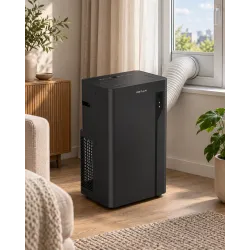
WetAir manuals and support
Check the exact model requirements
Use the selected model manual for exhaust, drainage, filter and post-transport instructions before first operation.
Sources and review
Recommended room sizes, power, timer, clearances and R290 safety requirements come from the WetAir WPAC-E07K and WPAC-H12KB manuals; the fan’s power comes from the SF-5045W manual. Advice on shading and heat sources is general practical guidance, not a promise of a particular temperature.
Frequently asked questions
Does a fan cool the room?
No. It moves air and makes you feel cooler, but it does not remove heat from the room.
Does a portable air conditioner need a hose?
Yes. In cooling mode the heat must leave through the supplied hose and window adapter, otherwise the room will not cool.
What size room will WPAC-E07K cool?
The manual gives a recommended 25 m² (35 m² for WPAC-H12KB). Sun, glazing and the number of people can change the result.
What does “over 7 m²” in the manual mean?
It is the minimum room size for safely installing an appliance with R290 refrigerant, not the area it cools.